
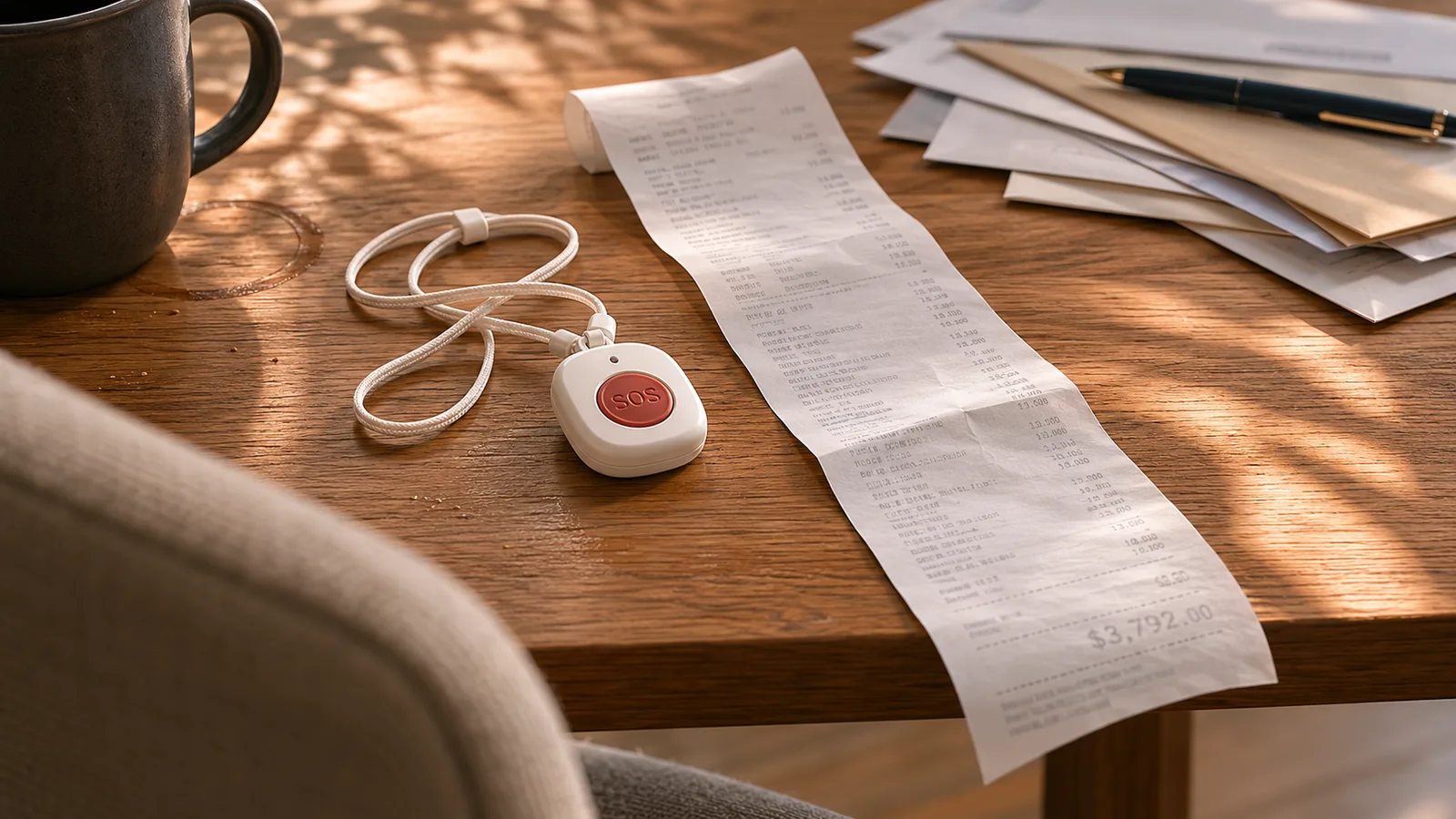
Some medical alert necklaces let you pay once for the device and call family members or 911 without a monthly monitoring subscription. The useful question is whether the way they get help suits you.
Before comparing prices, check three things:
Who answers? Your chosen contacts, 911, or a paid monitoring center.
What connects the call? A home-phone model still needs a paid phone line. A cellular model needs coverage; some include emergency calling without a monthly charge.
Do you have to press a button? Automatic fall detection is a separate feature. A no-monthly-fee label does not tell you whether it is included.
This guide compares two US examples, with prices in dollars and 911 as the emergency number.
Who answers when the button is pressed
Two setups can look similar in a product photo and behave differently in use:
Family first. A home pendant calls through a base unit on your phone line. It rings contacts you have chosen, such as a son or neighbor. Depending on the settings, it may go on to 911 if nobody answers. Agree who can respond and what should happen if they miss the call.
Direct to 911. A cellular pendant uses its own connection to reach an emergency call handler, at home or out, where it has coverage. There is no separate monitoring team to contact family or manage a personal response plan.
Both may be described as unmonitored: your contacts or 911 take the call, rather than a private monitoring center.
An engraved medical ID necklace serves a different purpose. It carries information for someone who finds you; it does not place a call.
Two examples, side by side
Two US products from LogicMark illustrate the difference. Both are listed as unmonitored systems with no monthly fees.

| Question | Freedom Alert | Guardian Alert 911 Plus |
|---|---|---|
| Who answers | Up to four chosen contacts, 911, or both, depending on the setting | 911 |
| How it connects | Base unit on your existing landline | 4G LTE cellular network, no landline needed |
| Where it works | At home | Where there is supported 4G LTE coverage |
| Automatic fall detection | Button-operated; no automatic fall detection listed | Listed as included on the current model |
| Price | $299 one time, no monthly monitoring fees | $399 one time, no monthly fees |
Prices and features checked against manufacturer information on November 11, 2026. Confirm current pricing and specifications with the supplier before buying.
Product details: Freedom Alert and Guardian Alert 911 Plus.
Freedom Alert: check your phone line and call settings. It needs a home telephone connection, so the line's cost remains. If yours is digital or VoIP, confirm compatibility before buying. The manual explains how unanswered calls move to the next contact. The recipient must confirm they have taken the call, so voicemail does not count. Whether the sequence ends with 911 depends on your settings.
Guardian Alert 911 Plus: check the generation. LogicMark announced the newer model in February 2025 with added fall detection. Older units under the same name may not include it, so confirm the exact model when buying secondhand or from a marketplace seller.
What you still pay for
"No monthly fee" and "no contract" are different promises. A service with no contract can still bill you every month. Check the recurring charge and cancellation terms separately.

Fall detection is a separate choice
The current Guardian Alert 911 Plus lists automatic fall detection as included; the Freedom Alert is described as button-operated.
If you cannot press the button
Look for automatic fall detection if you want an alert when you are unable to press a button. Check the exact model's feature and limitations before buying.
Four questions to ask before you buy
Making the choice
Want family called first? Choose a system that supports it and agree on a fallback if nobody answers.
Want direct access to 911 while out? Check cellular coverage and how emergency services will establish your location.
Want a staffed monitoring center? Compare the ongoing service charge with the arrangements above. Our guide to Life Alert costs and alternatives covers paid monitored options.
Compare the full cost, including the device, its connection and optional extras. Our overview of senior monitoring systems covers the wider range beyond pendants.
Where does Haelo fit?
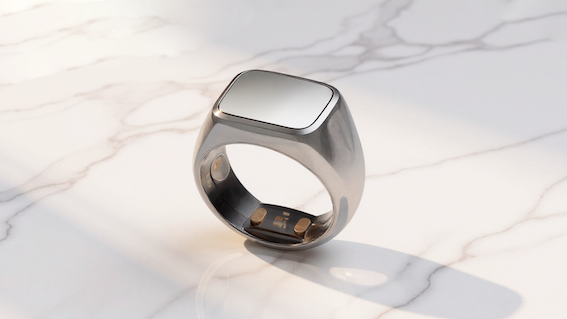
The Haelo smart ring is designed to detect a fall and automatically alert chosen family or caregivers through the Haelo app, without the wearer needing to press a button. It puts that function into a ring designed to look like everyday jewelry.
Haelo requires a subscription from US$11.99 a month, in addition to the ring purchase. It is available to pre-order.
A ring instead of a pendant. No cord around your neck or help button on your chest. For someone who dislikes wearing an alarm, a familiar piece of jewelry may be a more appealing choice.
Automatic alerts to people you choose. The intended advantage over a button-only pendant is that the wearer does not have to reach for a button after a fall. Some pendants also offer automatic fall detection, including the current Guardian model above.
Connected through a phone or Hub. The ring uses a nearby smartphone with internet access or an internet-connected Haelo Hub. The people receiving alerts need the Haelo app on a smartphone.
Haelo does not include a 24/7 monitoring center or direct 911 calling. It has no speaker or microphone for a voice conversation. Choose it if a discreet ring and alerts to people you know suit you; choose a voice-enabled pendant if speaking through the device is important to you.
First published