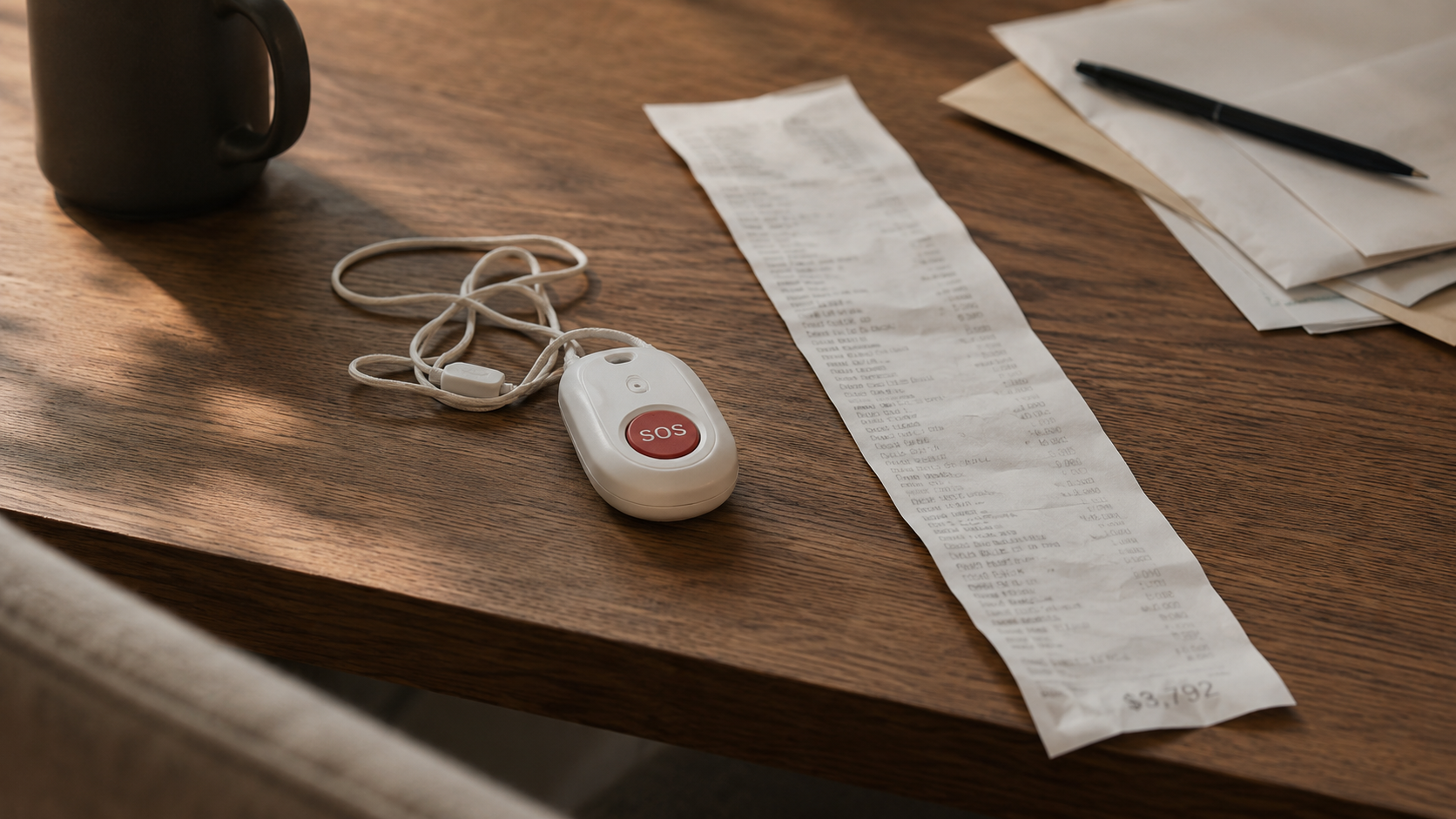
If you're looking into medical alert systems for yourself or someone you love, you already know how important it is to get this right. You want to ensure safety, and you want peace of mind. But when you start comparing options, the pricing can feel overwhelming - especially with Life Alert, the most well-known name in the space.
Taking into account their startup costs and ongoing fees, Life Alert's total cost over the mandatory 3-year contract comes to $1,893-$3,435, which works out to $53-$95 a month. It's also worth noting they don't currently offer automatic fall detection - every alert requires the wearer to press a button.
Life Alert's total cost over the mandatory 3-year contract comes to $1,893-$3,435, which works out to $53-$95 a month.
The good news is that there are now several alternatives worth considering. We've spent years researching this market - it's what led us to build our own wearable. Below are 5 alternatives to Life Alert that cost less, often do more, and don't lock you in.
| Life Alert | Haelo Ring | Bay Alarm | MobileHelp | Medical Guardian | Apple Watch SE | |
|---|---|---|---|---|---|---|
| Monthly cost(inc. fall detection) | $49.95–$89.95 | $11.99 | From $37.95 | $35.95 | From $37.95 | $0 |
| Equipment | $95–$198 | $250–$400 | $0 | $0 | From $149.95 | $249 |
| Contract | 3 years | None | None | None | None | None |
| Fall detection | Add-on ($10/mo) | Add-on ($11/mo) | Add-on ($10/mo) | Hard falls only | ||
| Battery | Years (base unit) | 7+ days | Days (pendant) | Days (pendant) | Days (varies) | ~18 hours |
| Wearable options | Pendant, wristband | Ring | Pendant, wristband, mobile | Pendant, wrist, mobile | Pendant, wristband, watch | Watch |
| Est. 3-year cost | $1,893–$3,435 | $631–$681 | From $1,366 | $1,294 | From $1,516 | $249–$659 |
Pricing verified May 2026. 3-year costs include equipment + monthly fees. Fall detection add-on costs included where applicable. Evaluation methodology.
How much does Life Alert cost in 2026?
Life Alert is the most recognised name in medical alert systems, and for good reason. They've been operating for decades, they run a 24/7 professionally monitored emergency response centre, and their in-home equipment has battery life measured in years. For many families, that track record carries real weight - though it comes at a premium.
Their in-home system starts at $49.95 per month, with most configurations ending up between $69.95 and $89.95 once you add their mobile GPS unit or wall-mounted button, plus a one-time activation fee of $95-$198. Life Alert does not currently offer automatic fall detection - every alert requires the wearer to press a button.
Where Life Alert stands apart from every other provider on this list is the contract. They require a 36-month commitment, and they're the only major provider in this market that still does. The New York Attorney General investigated their contract terms and reached a formal settlement in 2021, allowing over 5,500 New York consumers to cancel early. Every other provider listed below currently allows you to cancel at any time.
Life Alert also does not publish pricing on its website - you have to call a sales representative to find out what it costs. That lack of transparency is one reason many families start looking for alternatives.
Estimated 3-year cost: $1,893-$3,435 depending on configuration, including activation fee.
The 5 alternatives

Haelo Smart Ring — designed for round-the-clock wear
Haelo Smart Ring — designed for round-the-clock wear
Best for: families who want passive, 24/7 safety monitoring in a device that looks like jewellery, with monitoring at $11.99/month.
Disclosure: Haelo is our product. We've done our best to present it alongside the alternatives fairly, including where others may be a better fit.
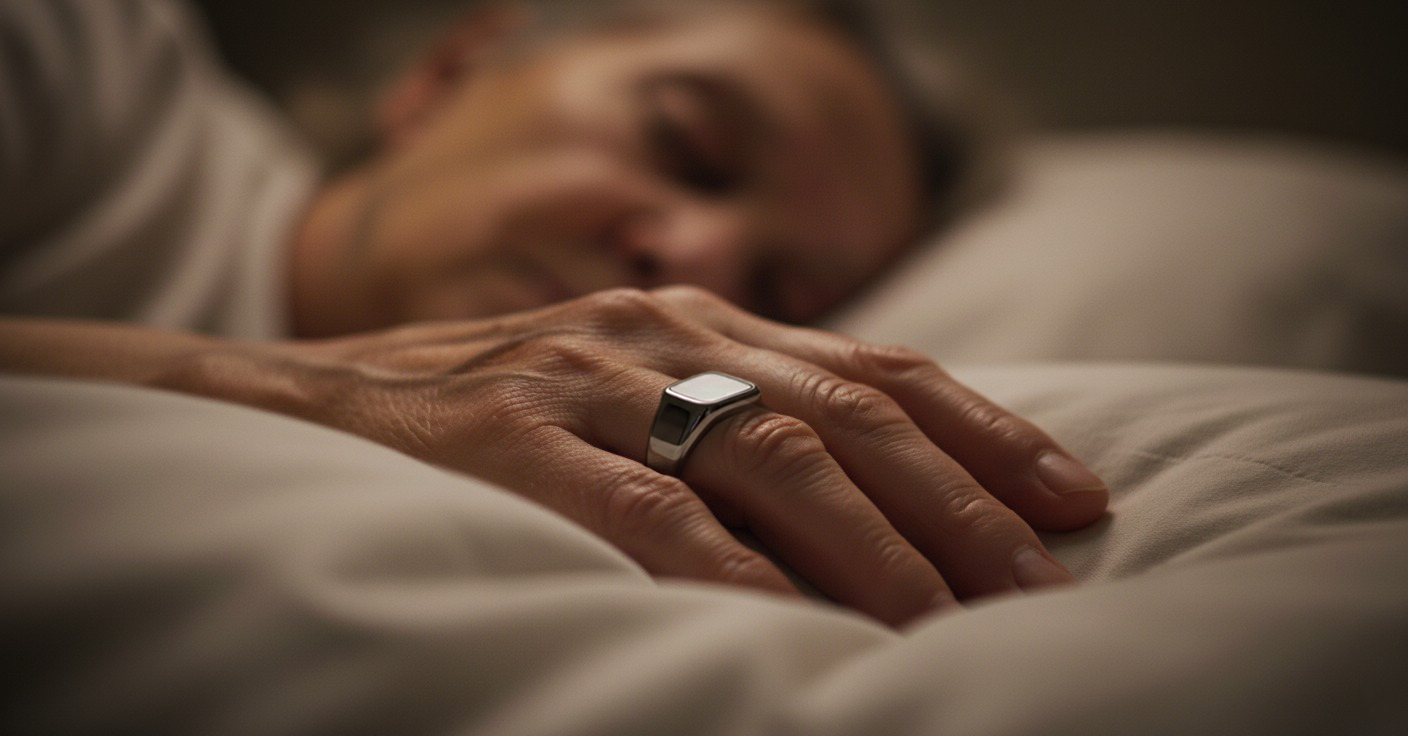
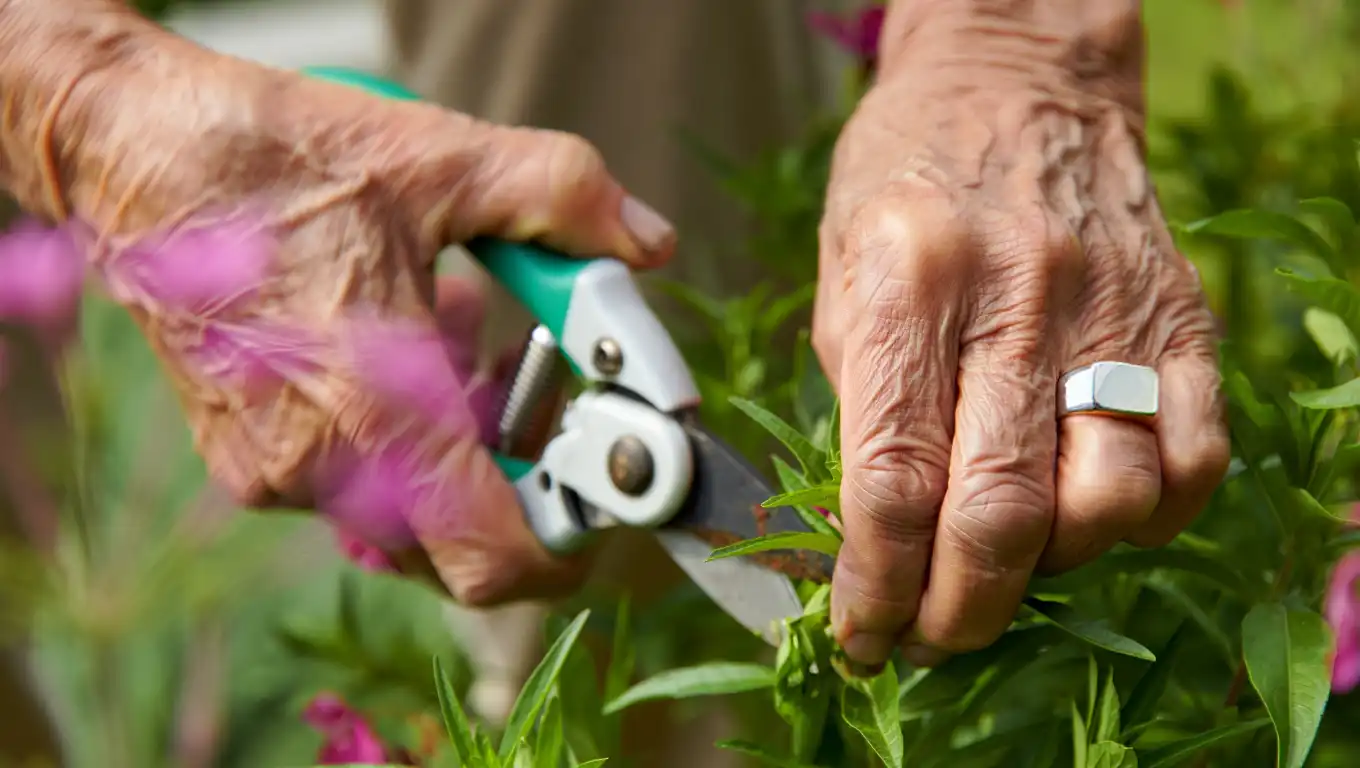
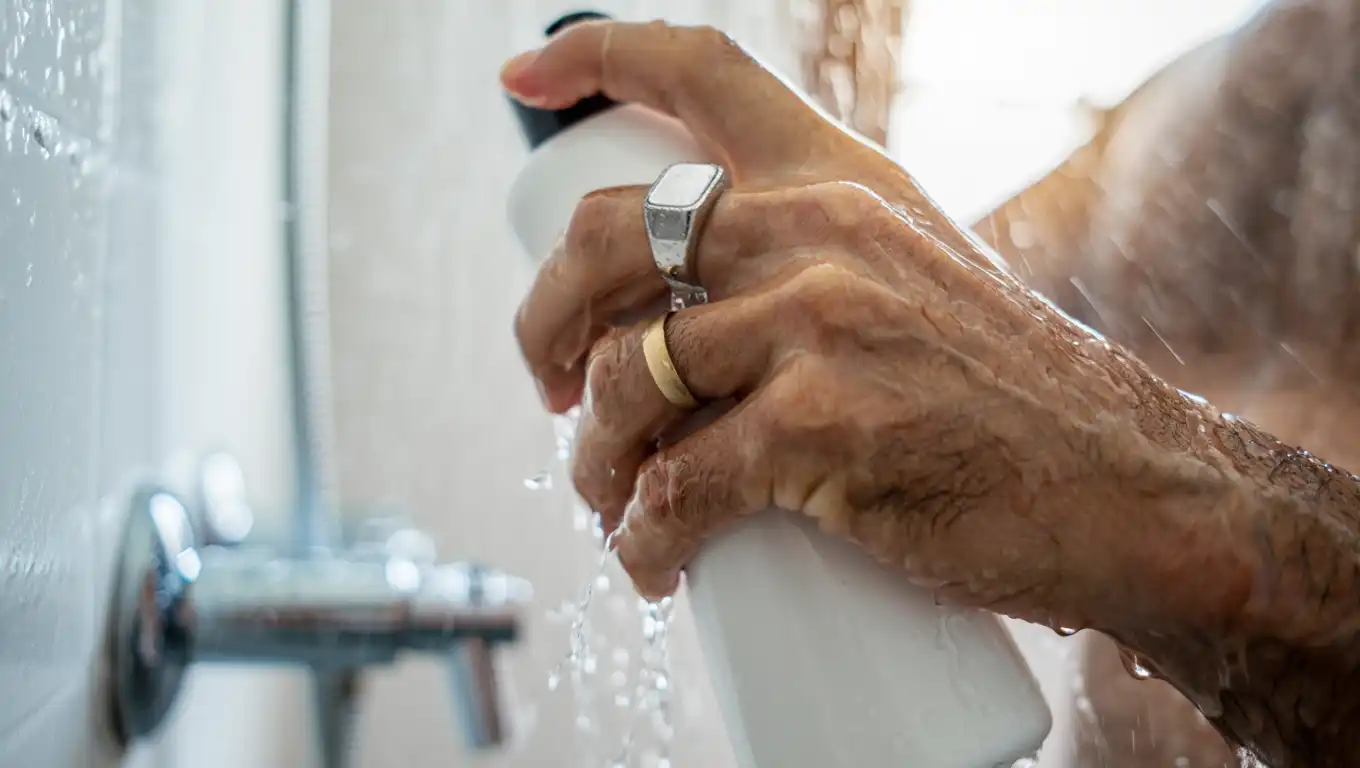
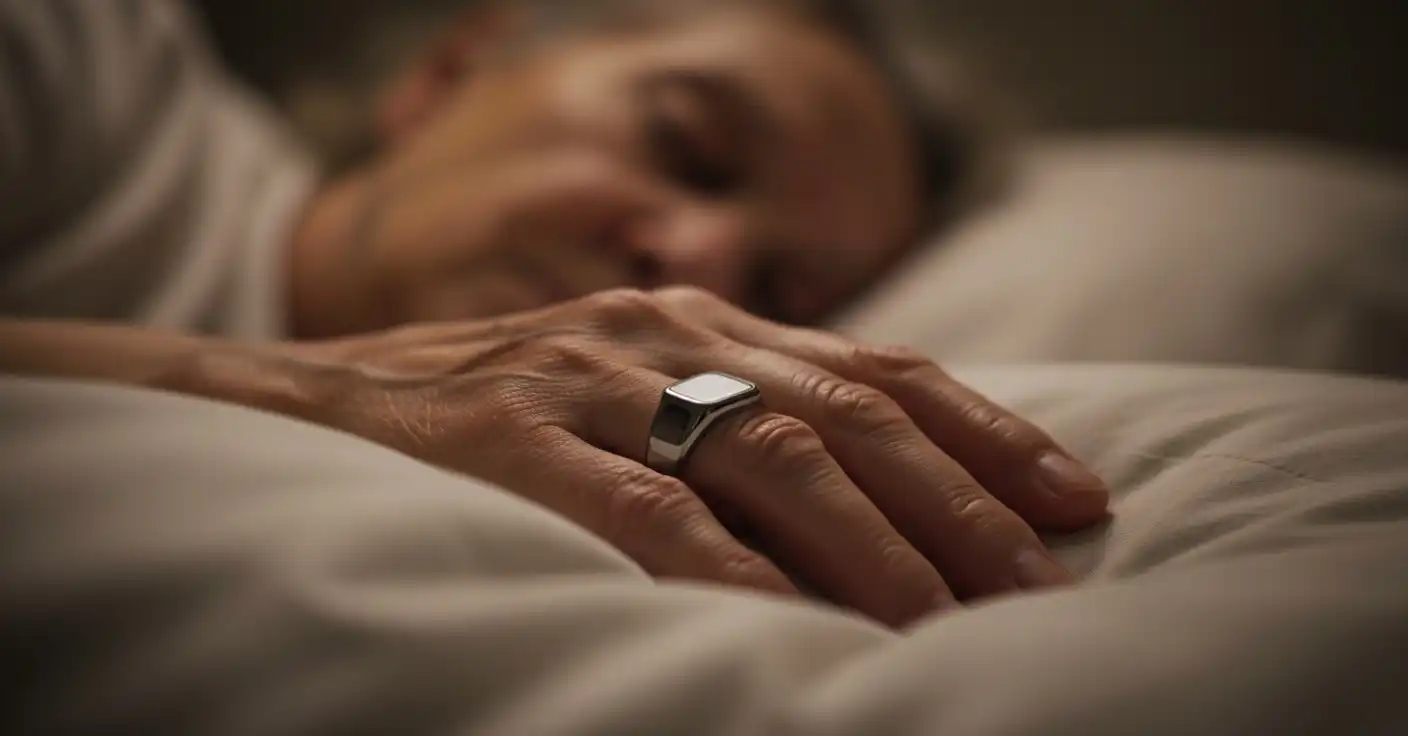
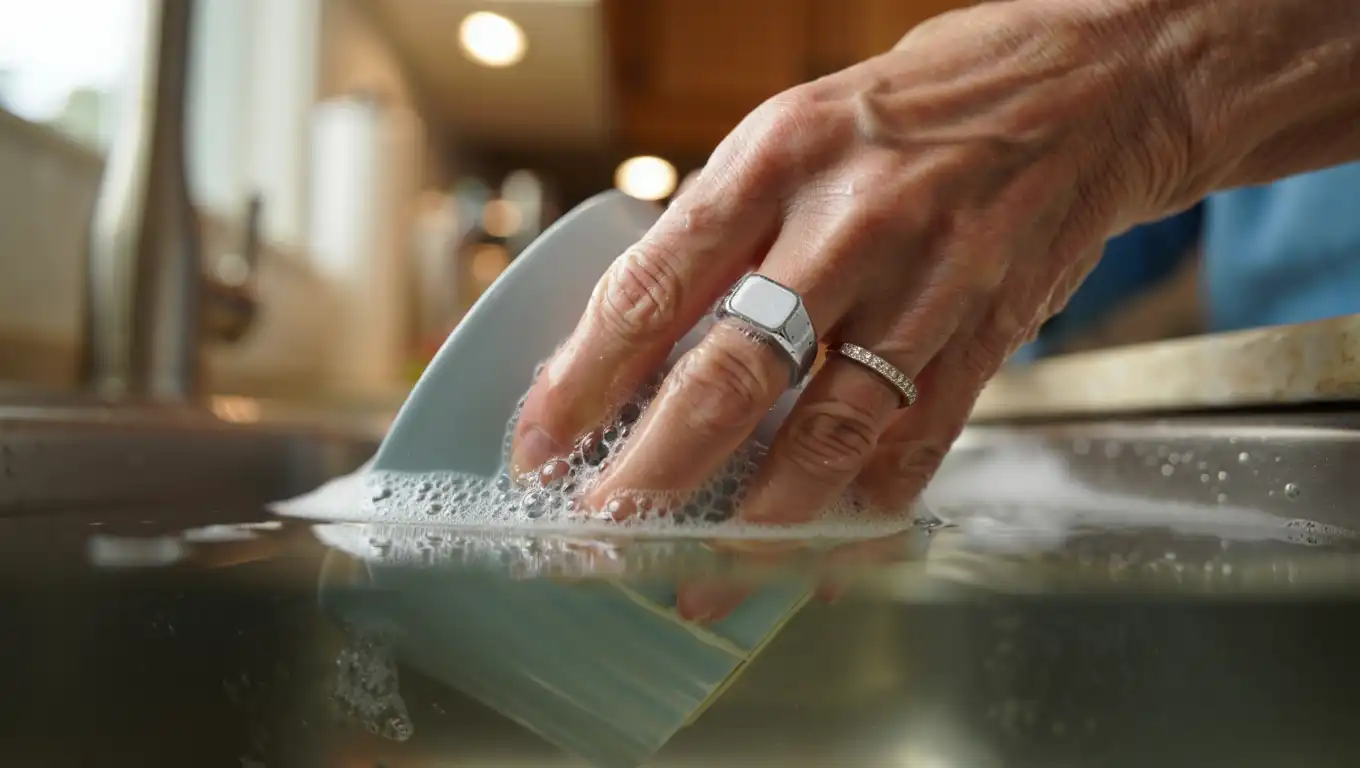
The Haelo ring is the first smart ring on the market to offer fall detection. It lasts over a week on a single charge, is fully waterproof (IP68), and is designed to stay on around the clock - in the shower, in bed, through the night. Monitoring is $11.99 per month. (Here's how we keep the price that low.) The ring itself costs $250-400, with the lower end for early pre-order customers.
Haelo was born from personal tragedy. Our co-founder Alex's father sadly passed away after a fall during the night, while his smartwatch was charging on a bedside table. We spent months looking for a device that was affordable, discreet, and simple enough that the people who needed it most would actually use it. We couldn't find something that solved all three problems - too expensive, too clinical-looking, or too reliant on the wearer being conscious and able to press a button. So we decided to build it.
The ring uses a patent-pending cloud-based architecture to run detection models that learn each wearer's individual movement patterns over time. Beyond fall detection, it continuously tracks heart rate, heart rate variability, and activity levels, flagging concerning changes that might indicate a problem before a fall happens. Alerts go to a chosen care circle of family members and caregivers.
Estimated 3-year cost (with fall detection): $682-832, depending on the ring price and whether you pre-order.
Worth knowing
Haelo is in pre-order, with first deliveries expected late 2026/early 2027. If you need protection right now, one of the other options on this list will serve you better today. Visit haelohealth.com for launch updates.
Bay Alarm Medical — best traditional monitored system
Bay Alarm Medical — best traditional monitored system
Best for: families who want a proven, professionally monitored system with no contract and no equipment fees.
Bay Alarm's in-home system starts at $27.95 per month (landline) or $34.95 (cellular), with fall detection available for $10 extra. No contract, no equipment fee for in-home systems, and a 15-day trial. They run a 24/7 U.S.-based monitoring centre and are consistently rated as one of the more reliable options in the market, with strong reviews across caregiver communities.
Their range includes in-home, mobile, and on-the-go devices, and their base station has a long range (up to 1,000 feet), so the wearer has coverage throughout the house and garden. For families who want a traditional monitored system without a long-term commitment, Bay Alarm is a strong choice.
Estimated 3-year cost (with fall detection): from $1,366 (landline) or $1,618 (cellular). No equipment fees.
Worth knowing
The equipment is functional rather than fashionable. The pendant and base unit look like medical devices, and that can matter - aesthetics is one of the leading reasons seniors stop wearing their device. If the person you're buying for is resistant to anything that looks clinical, this could be a barrier.

MobileHelp — best for mobile coverage on a budget
MobileHelp — best for mobile coverage on a budget
Best for: active seniors who spend time outside the home and want nationwide GPS protection at the lowest monthly cost.
MobileHelp starts at $24.95 per month with no equipment cost, no activation fee, and no contract. Fall detection is $11 per month extra. Their Duo bundle ($44.95/month) covers both home and mobile in one plan.
What sets MobileHelp apart is their mobile coverage. Their devices use AT&T's cellular network, so the wearer has protection outside the home as well as inside it. The MobileHelp Micro is one of the smaller mobile devices on the market (about 1.4 ounces), and they offer a companion caregiver app with activity tracking and medication reminders. Their 24/7 monitoring centre is U.S.-based.
Estimated 3-year cost (with fall detection): $1,294. No equipment fees.
Worth knowing
Devices are described as water resistant rather than fully waterproof, which is worth noting given that the bathroom is one of the most common locations for falls. And like most traditional systems, the pendant and wrist button form factors can be a barrier to consistent use if the wearer doesn't like how they look or feel.

Medical Guardian — best companion app and device range
Medical Guardian — best companion app and device range
Best for: caregivers who want the most comprehensive monitoring dashboard and a choice between pendants, wristbands, and a smartwatch.
Medical Guardian's plans start at $27.95 per month (with annual billing; month-to-month is higher) and fall detection is $10 extra. Where they stand apart from other traditional providers - including MobileHelp, which they acquired in 2024 - is the depth of their caregiver tools and the range of devices on offer.
The MyGuardian app gives caregivers GPS tracking, activity monitoring, and real-time updates on the wearer's status - it's among the most comprehensive caregiver dashboards in the consumer PERS space, going well beyond the basic tracking that MobileHelp's app offers. Medical Guardian also offers the widest range of wearable options: traditional pendants, a wristband, and the MGMove smartwatch, which looks more contemporary than most medical alert devices and includes two-way voice communication. They also offer a voice-activated option for hands-free calling, which is useful for people with limited mobility. Their 24/7 monitoring centre has a strong reputation for fast response times.
Estimated 3-year cost (with fall detection): from $1,516 (annual billing), including equipment fee.
Worth knowing
Monthly subscription costs are higher than MobileHelp's, especially if you pay month-to-month rather than annually. And while the smartwatch option is more modern than a pendant, it still has the form factor challenges common to all watch-based systems - nightly charging, screen complexity, and the fact that not everyone wants to wear a watch.

Apple Watch — best for tech-savvy users who want no monthly fees
Apple Watch — best for tech-savvy users who want no monthly fees
Best for: someone who is active, comfortable with technology, already owns an iPhone, and wants fall detection with zero ongoing cost.
The Apple Watch SE costs $249 with no monthly subscription at all. Fall detection is built in and activates automatically if the wearer's age is set to 55 or over in the Health app. It also includes emergency SOS, heart rate monitoring, and irregular rhythm notifications.
For the right person, the Apple Watch offers good value - the total three-year cost is just $249 for the GPS model. The GPS + Cellular model ($299) requires a carrier plan (typically ~$10/month) for independent use without an iPhone nearby.
Estimated 3-year cost: $249 (GPS) or ~$659 (GPS + Cellular with ~$10/month carrier plan).
Worth knowing
The 18-hour battery life means it's typically charging overnight, when fall risk peaks. Its fall detection catches hard falls (trips, stumbles) but not slower collapses - a challenge for every fall detection system. When it does detect a fall, it calls 911 directly rather than a monitoring centre with the wearer's medical history on file. And the touchscreen can be difficult for people with arthritis or limited dexterity.
If you've decided which system makes sense for your family, the next challenge is often the conversation itself - raising safety concerns with a parent without making them feel like they're losing their independence.

Free Resource
Not sure how to start the safety conversation?
Download our free 1-page guide: The "How to Talk to Parents About Safety" Script
Download Free PDFWhat matters when choosing
Will they actually wear it? This is worth thinking about carefully before comparing features. If the person you're buying for won't wear a pendant, a pendant-based system won't help them - no matter how good the monitoring is. If a smartwatch feels too complex, the same applies. The best device is the one they'll actually keep on. Match the device to the person, not the feature sheet.
Does it work when they can't press a button? Automatic fall detection matters because many serious falls leave the person unable to call for help. Life Alert and most traditional pendants rely entirely on a button press, which assumes the wearer is conscious and can reach the device. That's often not the case. Bay Alarm, MobileHelp, and Medical Guardian all offer automatic fall detection as a paid add-on. The Apple Watch and Haelo include it as standard.
What happens at night? If the device needs nightly charging, it's likely off the wrist during the highest-risk hours. The Apple Watch's 18-hour battery typically means it charges overnight. Traditional pendants have long battery life but are often removed for sleep. Haelo's up to 12-day battery and ring form factor are designed specifically for continuous overnight wear. Battery life isn't a convenience feature - it's a safety feature.
Who does it call? Bay Alarm, MobileHelp, Medical Guardian, and Life Alert all connect to a 24/7 monitoring centre where a trained operator has the wearer's medical history on file. The Apple Watch calls 911 directly, which means a dispatcher with no background on the caller. Haelo alerts a chosen care circle of family and caregivers. All three approaches work, but they're different, and it's worth thinking about which one your family prefers.
What's the total cost? Monthly prices can be misleading. Add equipment fees, activation charges, and fall detection add-ons to the monthly rate, then multiply by how long you expect to use the service. Life Alert's $49.95 headline becomes $1,893-$3,435 over the 3-year contract once you factor in their $95-$198 activation fee and typical add-ons. The comparison table at the top of this article breaks this down for each provider.
How Haelo keeps costs down
When people see monitoring at $11.99 per month next to competitors charging $30-90, the natural question is: what's the catch? There isn't a catch - but there is a different way of building the system.
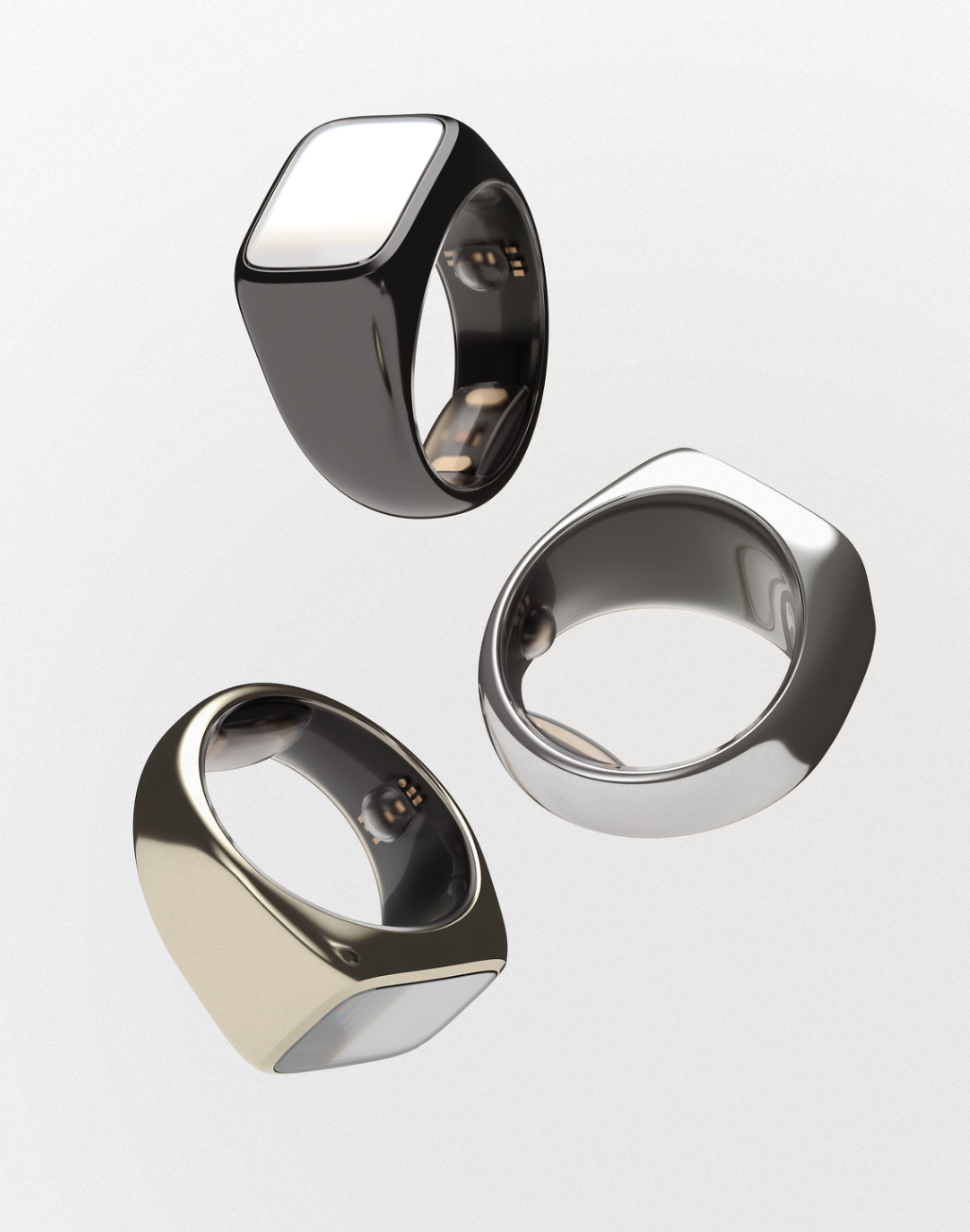
Simpler hardware. A smart ring doesn't need a screen, a speaker, a microphone, or a cellular modem. Traditional medical alert systems are built around base stations, pendants with two-way audio, and cellular modems - each component adding cost, complexity, and points of failure. Haelo strips all of that back. The ring's only job is to capture sensor data and transmit it. By designing hardware that does one thing well rather than trying to do everything, we keep manufacturing costs significantly lower.
Cloud-based detection. Fall detection has traditionally been limited by what can fit on the device itself. Haelo takes a different approach, and one we've filed patents for: the ring transmits raw sensor data to the cloud, where there are no limits on computational power. That means we can cross-reference accelerometer, gyroscope, and heart rate data in real time, and learn each wearer's individual movement patterns over the first weeks of wear. Because the heavy processing happens in the cloud rather than on the ring, the ring itself uses less power - lasting over a week on a charge - and every improvement to our detection models deploys instantly to every ring worldwide.
No 24/7 call centre. Traditional providers like Life Alert, Bay Alarm, and Medical Guardian all operate round-the-clock monitoring centres staffed with trained operators. That's a significant ongoing cost baked into every monthly fee. Haelo takes a different approach: when the system detects a fall or concerning change, it alerts a care circle of chosen family members and caregivers directly. No call centre in the middle means a fundamentally different cost structure. We know some families prefer the reassurance of a professional monitoring centre, and in those cases providers like Bay Alarm or Medical Guardian may be a better fit.
Direct-to-consumer. Life Alert won't reveal pricing without a phone call. Traditional PERS companies often rely on large sales teams, dealer networks, and phone-based sales operations. Haelo sells directly online, which means lower customer acquisition costs that translate into lower prices.
Frequently asked questions
Does Life Alert have fall detection?
No. Life Alert does not offer automatic fall detection on any of its plans or devices. Every alert requires the wearer to physically press a button. Every other system in this article offers some form of automatic fall detection.
Can you cancel Life Alert at any time?
No. Life Alert requires a 36-month contract. Early cancellation is typically only permitted with documentation of the subscriber's death, a move to an assisted living facility, or a transition to 24/7 skilled in-home care. After the initial 36 months, the contract converts to month-to-month.
How do I get my parent to wear a medical alert device?
This is one of the most common challenges families face, and pushing harder rarely works. The key is understanding why they're refusing - usually stigma, discomfort, or a feeling that the device signals the end of their independence. Choosing a device that doesn't look or feel like a medical device can make a significant difference. We've written a full guide on why seniors refuse to wear medical alert devices and what actually works, and you can also download our free conversation guide above.
Does Medicare cover medical alert systems?
Generally, no. Original Medicare (Parts A and B) does not cover Personal Emergency Response Systems. Some Medicare Advantage (Part C) plans offer partial coverage, and HSA/FSA funds can often be used. Check with your specific plan, as coverage varies.
Life Alert built this category and introduced millions of families to emergency response technology. But the market has moved on. Whatever you choose, the important thing is that the person you care about is actually protected - not just subscribed.
Haelo is one of the alternatives reviewed in this article. We've aimed to present all options fairly, including where others are a better fit.
Evaluation methodology: We compared pricing (including equipment fees, activation charges, and contract costs), fall detection capability, battery life, form factor, and real-world compliance - whether the person you're buying for will actually wear the device around the clock. Pricing verified May 2026. Sources: SafeHome.org, SeniorLiving.org, The Senior List. Always check current rates before purchasing.
Written by Geoffrey Taunton-Collins, Founding Partner & CMO at Haelo Health. Last updated May 2026.
First published · Last updated