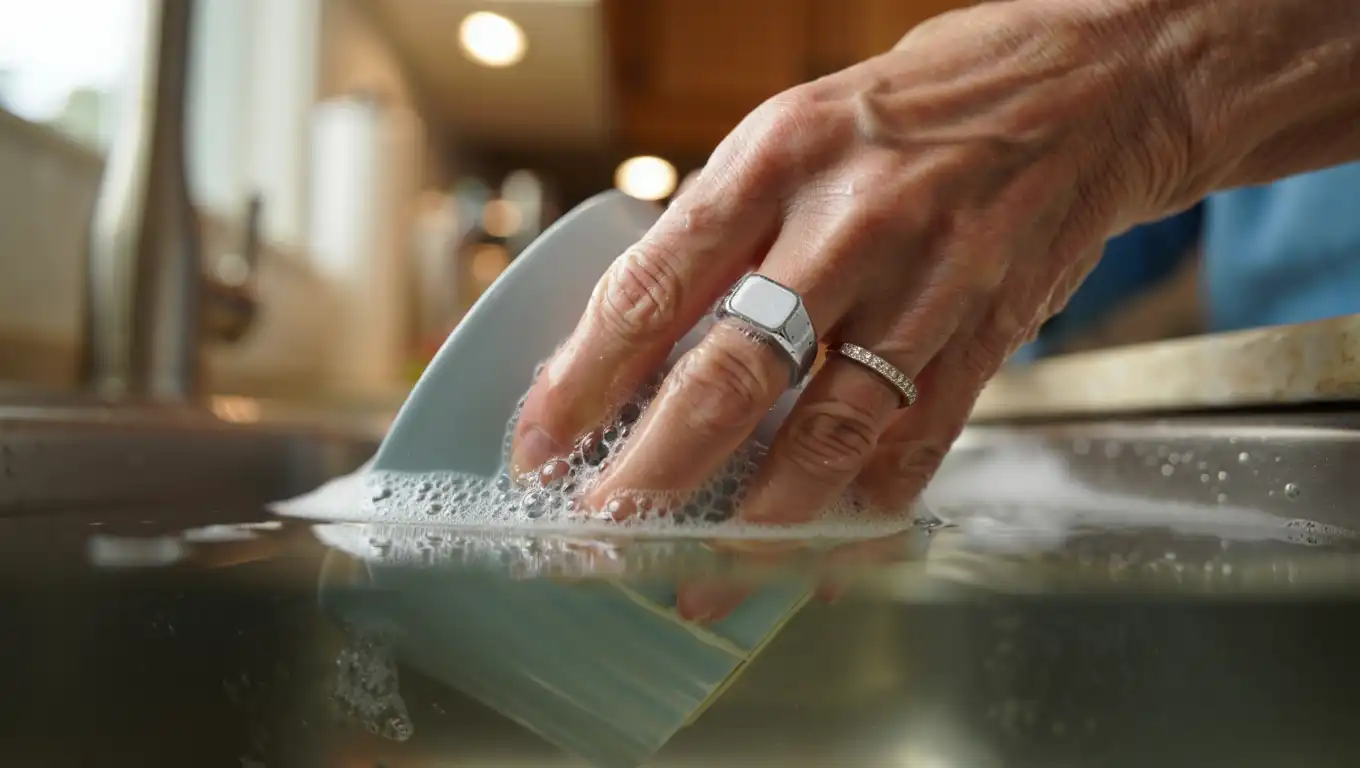
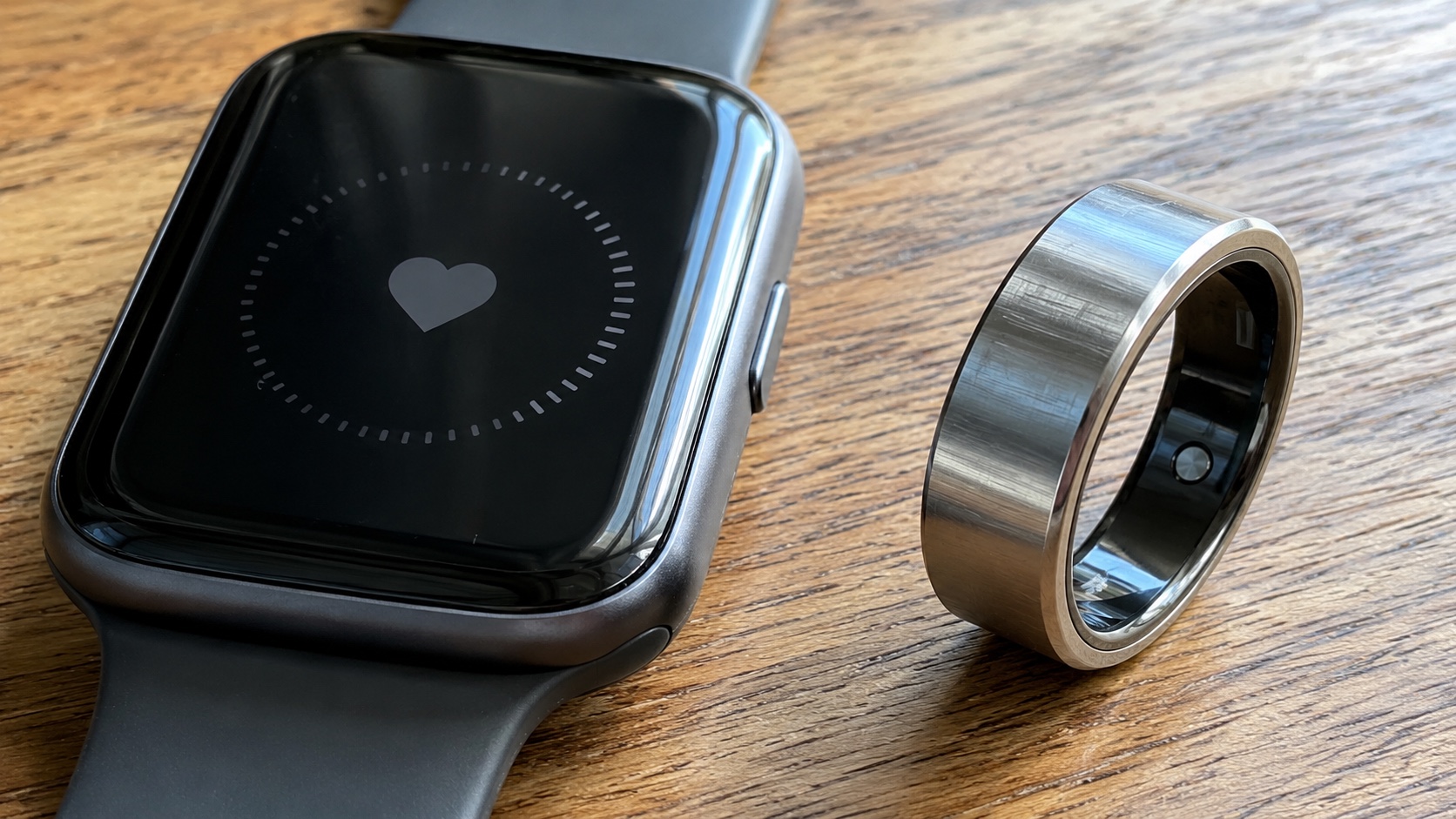
If you're looking for a discreet fall detection device, odds are a smart ring and a smartwatch are two of the options you've considered. But determining which is the best option for you can feel downright confusing; both aim to keep someone safe, yet they make very different trade-offs.
Those are trade-offs we at Haelo have had to weigh carefully. We're building the first smart ring with fall detection ourselves, and getting it right has meant carefully studying how smartwatches detect falls, since the technology was proven first. So the strengths and weaknesses explained below come from hands-on work with both.
Unfortunately, my co-founder and I learned the importance of fall detection the hard way. Alex lost his father after a night-time emergency; the smartwatch that might have detected the fall and called for help was charging on the bedside table. Since then, we have explored the fall-detection market extensively, including the uncomfortable truth that protection only works when the device is actually being worn. You can read more about that story on our About Us page.
So we found the key questions to be:
Which device is most likely to:
detect the falls you care about?
be worn when they happen?
alert the right person afterwards?
This guide compares smartwatches and smart rings across reliability, wearability, alerts, location, communication, and cost. Fall detection bands are common too, and we'll compare those to smart rings in a follow-up piece.
Verdict: smart ring or smartwatch?
Pick a smartwatch if you want an interactive device with a screen, but are comfortable with regular gaps in protection while it charges. It offers mature, available-now fall detection plus on-device calling, GPS, location sharing and Emergency SOS. With cellular and GPS, it can call for help and share a location anywhere, on a walk, in the garden, at the shops. Apple Watches have detected falls since 2018, so the technology is well established. The trade-off is that many smartwatches need charging every day or two, so they spend hours off the wrist, usually overnight, when they are often needed most.
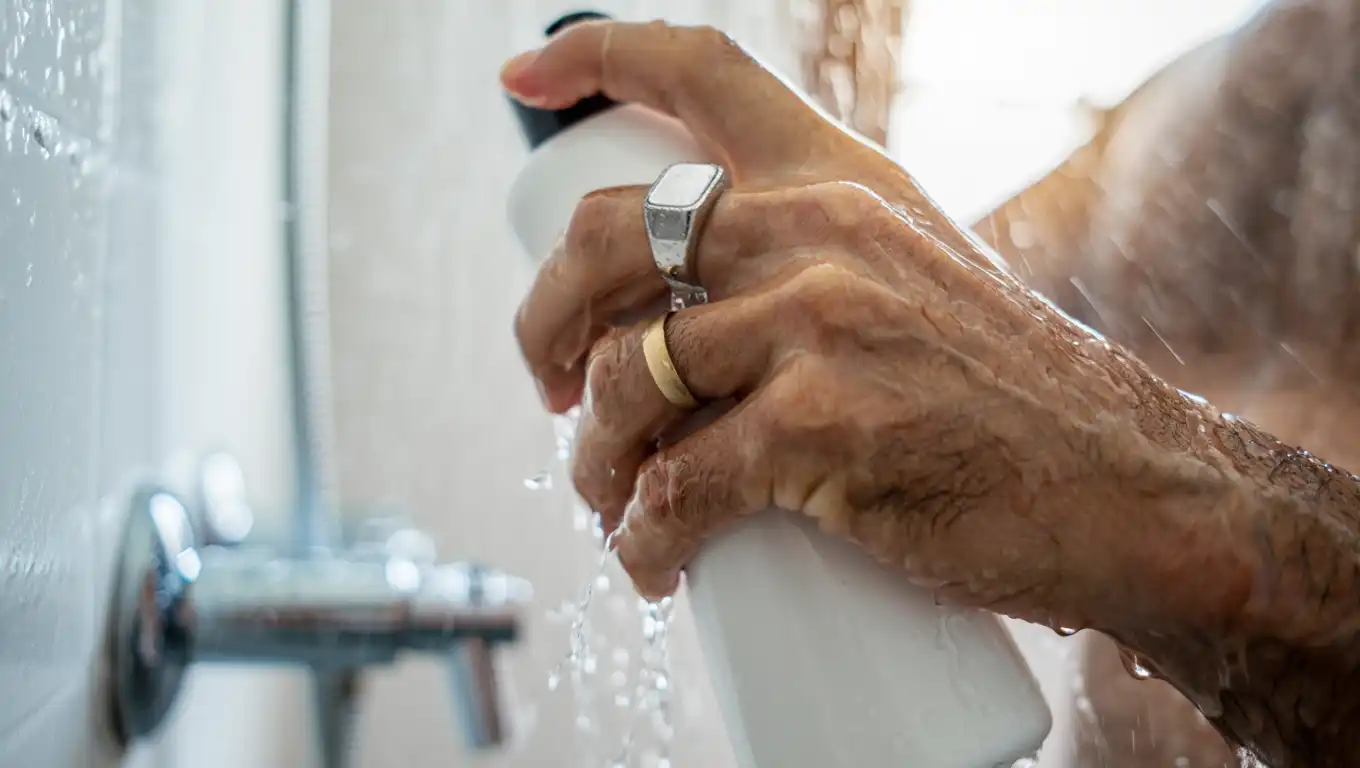
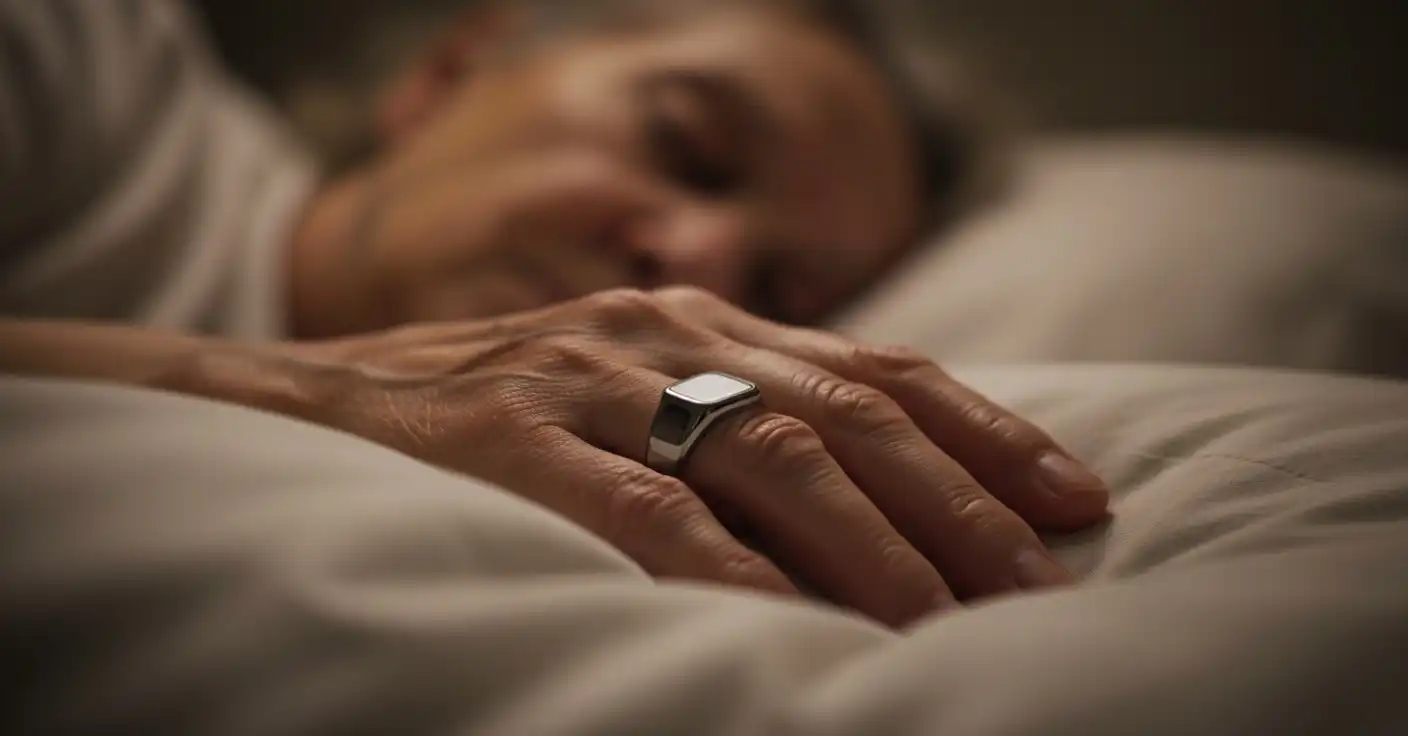
Pick a smart ring if the harder problem is simply getting a device worn at all, and you want to minimise gaps in protection. A smart ring does not come with features like a screen, on-device calling or GPS, so it is not the right pick if those matter to you. But crucially it is designed to detect a fall and alert nominated contacts. And it holds at least one significant advantage over the smartwatch: 24/7 protection. A longer, 7-day-plus battery life and a discreet design mean it typically gets worn overnight and in the shower, when emergencies are very common.
Don't like the sound of either? There are plenty of fall detection options other than smartwatches and smart rings. We cover these in our guide to senior monitoring systems.

| Factor | Smartwatch Apple, Samsung, Pixel | Smart ring e.g. Haelo |
|---|---|---|
| Battery & overnight wear | Usually needs charging every 1–2 days, depending on model and settings. | 7+ day battery potential, so it is easier to keep on overnight. |
| Automatic fall detection | Available now on some watches. | Purpose-built around fall detection. |
| Alerts & communication | On-device SOS, calling, location sharing and screen prompts on many models. | Alerts nominated contacts; no two-way voice from the ring itself. |
| GPS & phone dependence | Advanced location features, especially on cellular or LTE models. | Dependent on a phone, hub, gateway or local network. |
| Ease of use & dexterity | Screen, menus and notifications - useful for some, overwhelming for others. | No screen, more passive, lower cognitive load. |
| Purchase & ongoing cost | Higher device cost, plus a possible cellular plan or subscription. | Lower device cost than many smartwatches, plus a subscription. |
Last updated: September 2026. Specs and prices change often - always verify with the manufacturer before buying.
How fall detection works on a wearable
Most wearable fall detection systems use motion sensors to look for the movement pattern of a fall.
A typical device will use an accelerometer and gyroscope to detect sudden movement, impact, rotation, and changes in body position. The device or app then tries to work out whether the movement looks like a real fall or something harmless, like sitting down heavily, dropping the device, clapping, or doing exercise.
Hard falls are usually easier to detect. These are the sudden, high-impact falls where the body drops quickly and hits the ground with force.
Softer falls are harder. A slow slide from a chair, a stumble onto a bed, or a gradual collapse may not create the same sharp impact pattern. This is why no wearable should be treated as perfect.
The core trade-off every fall detector must balance
Missing a real fall - too many missed falls defeats the whole point of the device.
Sending too many false alarms - too many false alerts can make people stop trusting the device and switch it off.
For a deeper explanation of ring-based fall detection, see how smart-ring fall detection works.
The case for a smartwatch
Smartwatches are among the most complete fall detection options available to buy today for people who want an all-in-one device.
Examples include the Apple Watch Series 11, Apple Watch SE 3, Samsung Galaxy Watch8, and Google Pixel Watch 4. Garmin watches are another common choice, though their equivalent feature, Incident Detection, only works during a tracked activity such as a run or ride, not as all-day fall detection.
These are not specialist older-adult care products. They are mainstream consumer smartwatches. But that can also be part of their strength. They are mature, widely available, regularly updated, and built into phone ecosystems people already use.
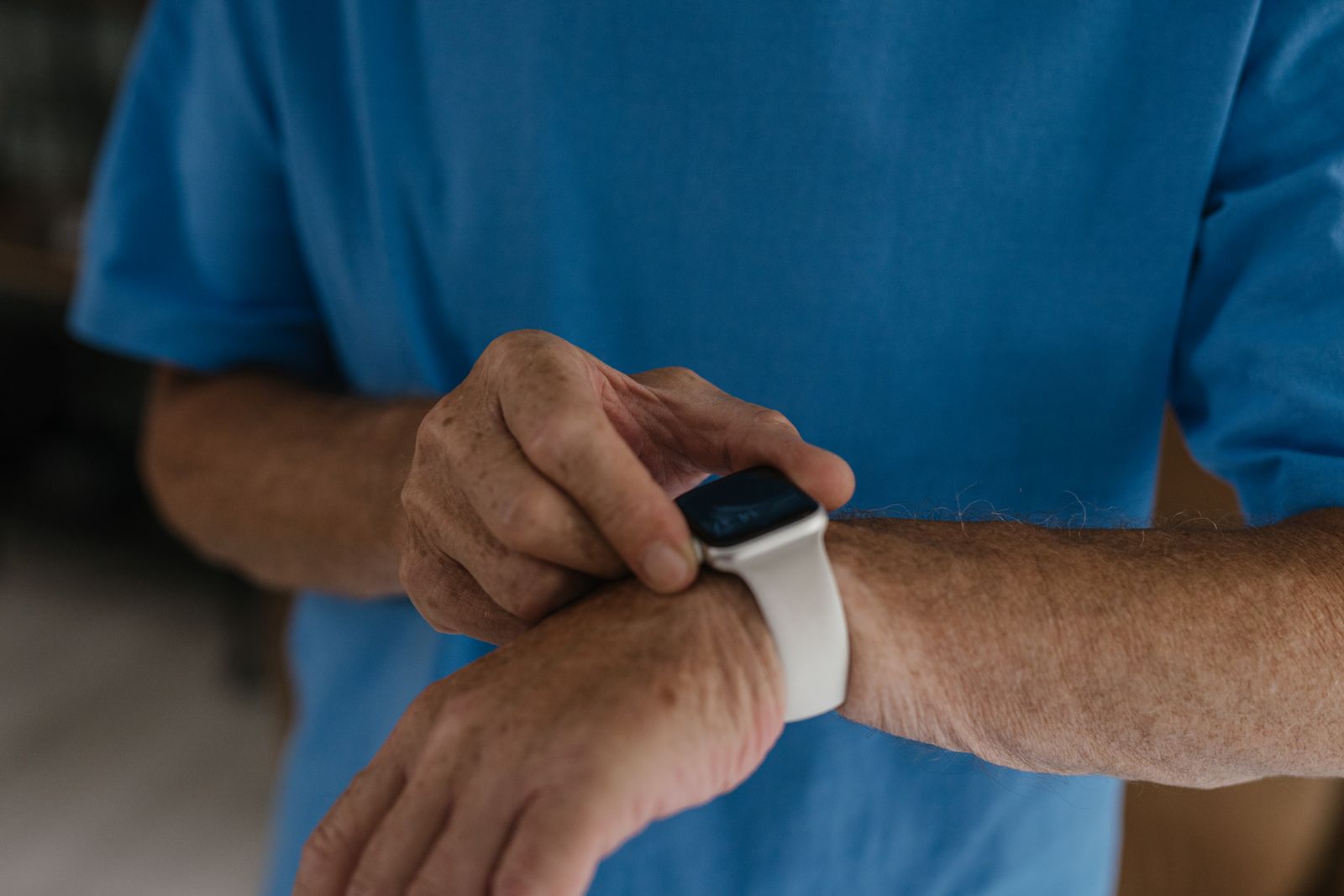
After a fall is detected, a smartwatch can do a lot from the wrist itself. On an Apple Watch, for example, a hard fall triggers an on-screen alert with a countdown; if the wearer does not respond, it can call emergency services and share their location automatically. Exactly which of these features you get depends on the model and whether it has cellular.
That matters because detecting a fall is only the first step. The response afterwards, whether that means a family alert, an emergency contact, or emergency services, is what determines whether help can actually arrive.
This is different from the smart ring's alert pathway, where the emphasis is currently on notifying a chosen care circle. Neither model is inherently better. The question is which response pathway the person and family actually need.
A smartwatch is a good fit when the wearer:
already uses a smartphone
is comfortable wearing a smartwatch
accepts the gaps in protection while it charges
wants GPS and outdoor protection
may need to speak to someone after an incident
wants wider health, fitness, and communication features
For iPhone users, the Apple Watch is the obvious benchmark. Apple Watch Series 11 includes Fall Detection, Emergency SOS, GPS, speaker, microphone, and cellular options. Apple Watch SE 3 is a lower-cost route into the same general Apple safety ecosystem, with some feature differences.
For Android users, Samsung and Google are the main options. Samsung Galaxy Watch models running Wear OS support hard fall detection and SOS options when the feature is enabled. Google Pixel Watch 4 is also worth considering because of its LTE options, GPS, emergency features, and improved battery claims compared with earlier Pixel Watch models.
Apple Watch Ultra 3 and Galaxy Watch Ultra may also be relevant for people who want longer battery life and are comfortable paying more. These have battery lives of up to 42 hours (Apple Watch Ultra 3) or up to 60 (Galaxy Watch Ultra). Note this still involves charging every two or three days.
The smartwatch trade-off
The trade-off is friction. A smartwatch has to be charged often, it has a screen and settings to manage, and for some people it never quite stops feeling like a gadget rather than a safety device.
For a tech-comfortable older adult, that may be fine. For someone with memory issues, poor eyesight, low dexterity, a preference for something discreet, or a strong dislike of screens, it can be a problem.
The overnight gap
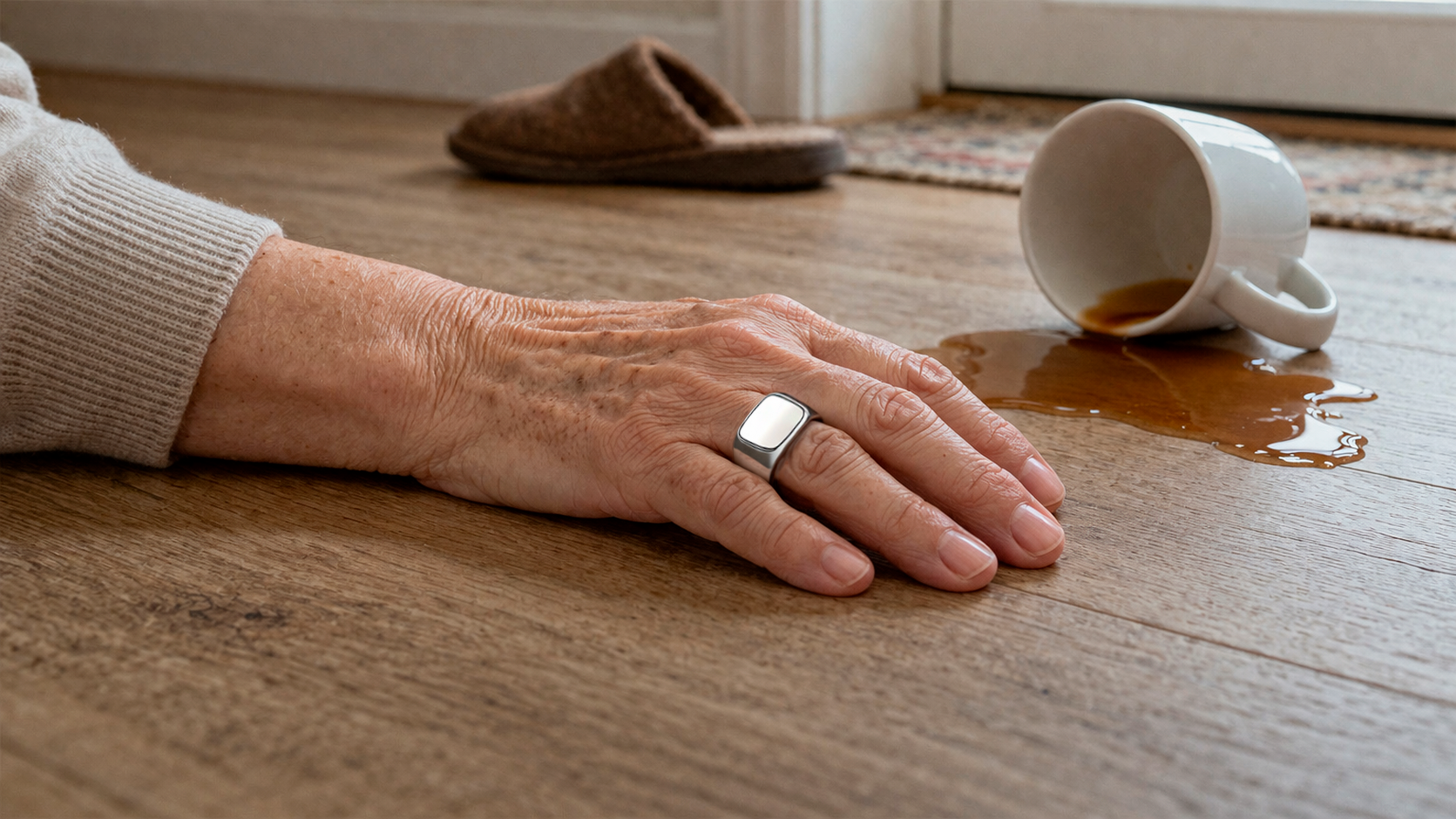
A watch that is on the charger beside the bed cannot detect a fall during a night-time bathroom trip. And night-time is when falls are most dangerous: low light, sleepiness, urgency, medication effects, and no one nearby to notice.
There are also setup dependencies. Those features have to be switched on correctly, and many depend on the phone being nearby, on Wi-Fi or cellular coverage, or on the country and carrier.
A smartwatch can be excellent. But it is not "set and forget" for everyone.
A smartwatch may not be the best option if the person:
wants to avoid gaps in protection
refuses to wear a smartwatch, finds it bulky, or prefers their own watch
takes watches off at night
finds touchscreens and notifications confusing or overwhelming
In those cases, the best smartwatch on paper may still fail in real life.
The case for a smart ring
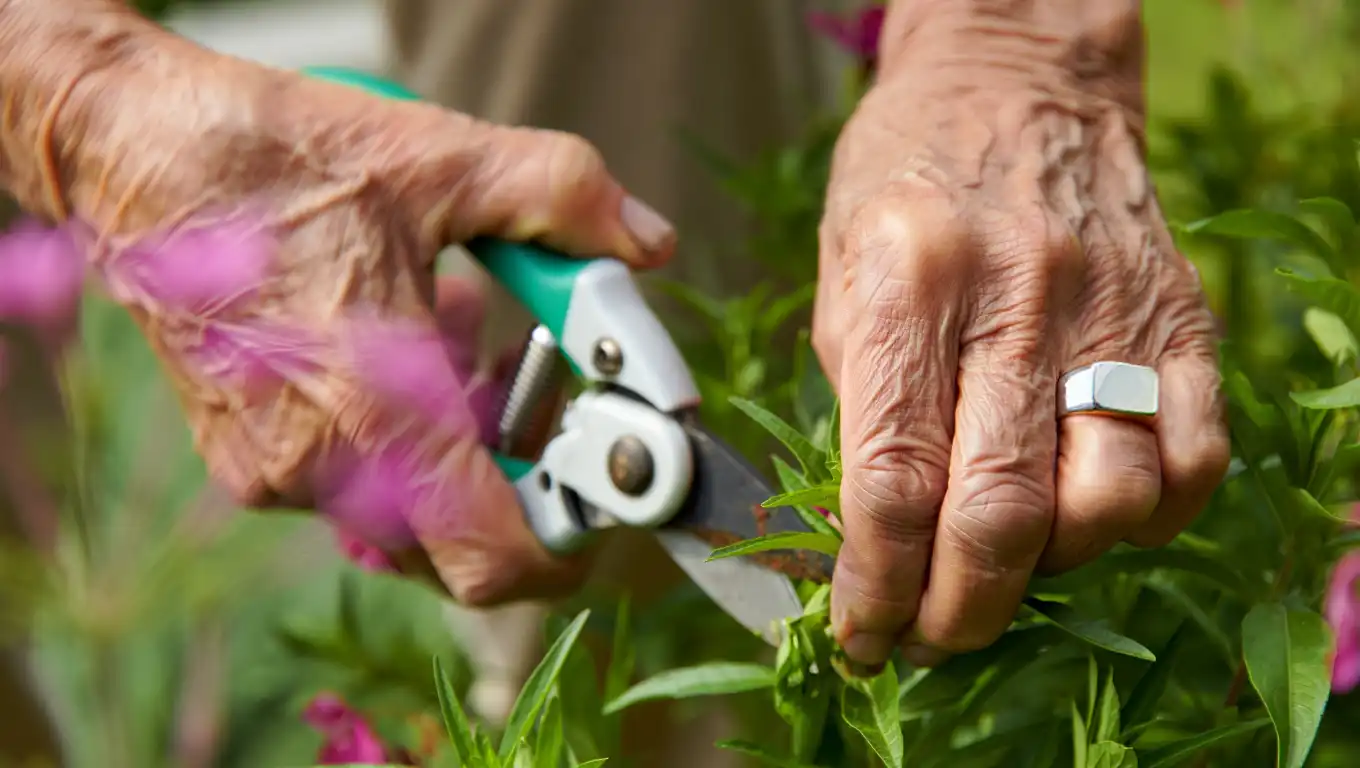
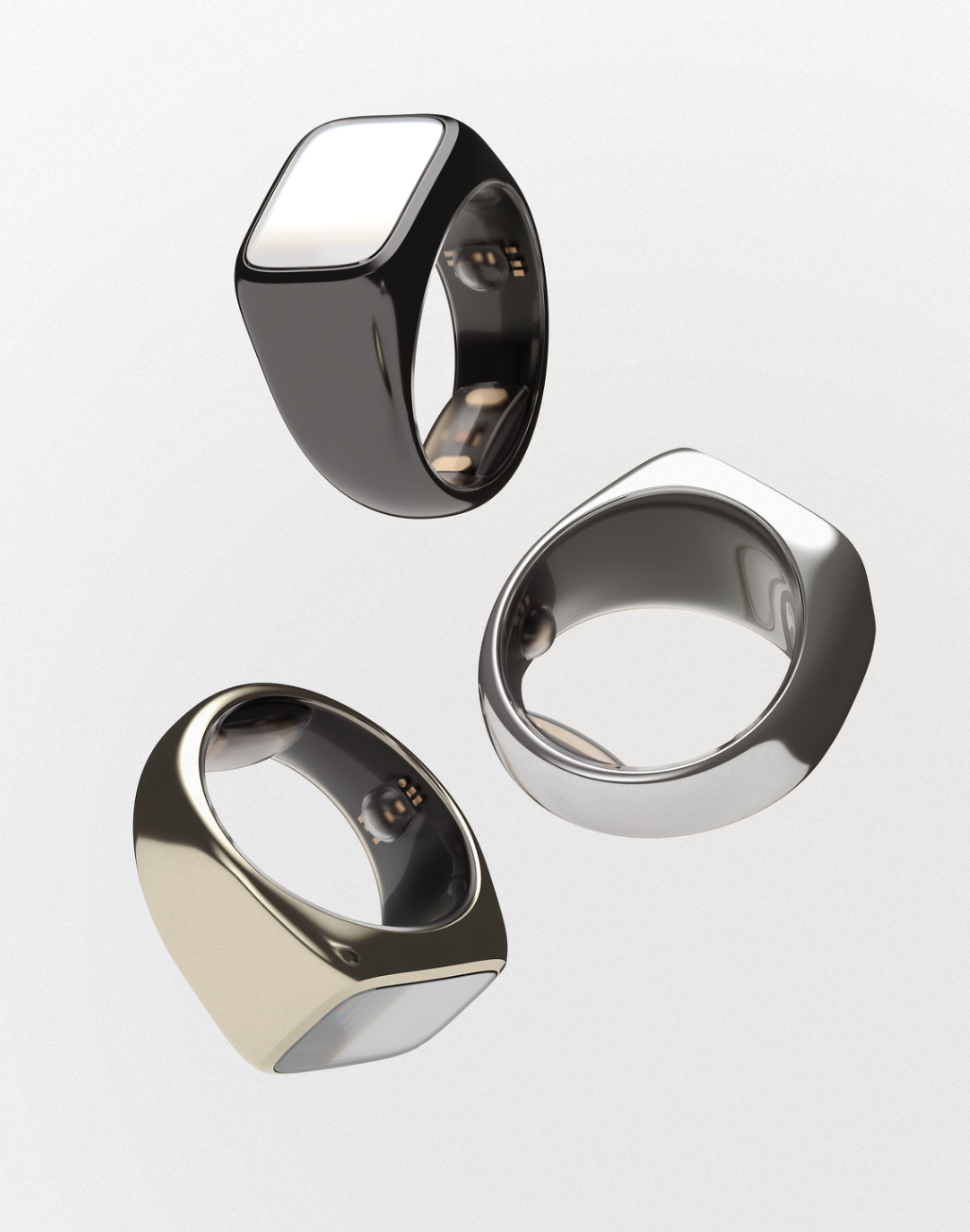
A smart ring starts from a different premise: a fall detector only helps if it is actually being worn, so it should be as easy to keep on as possible.
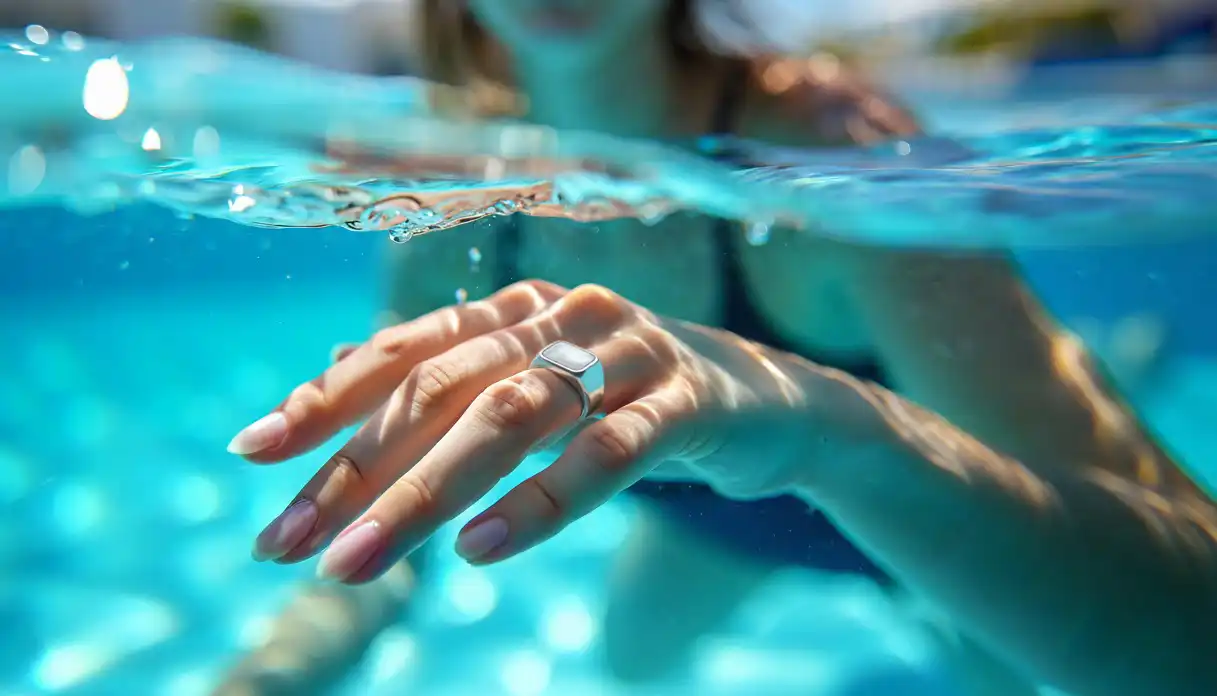
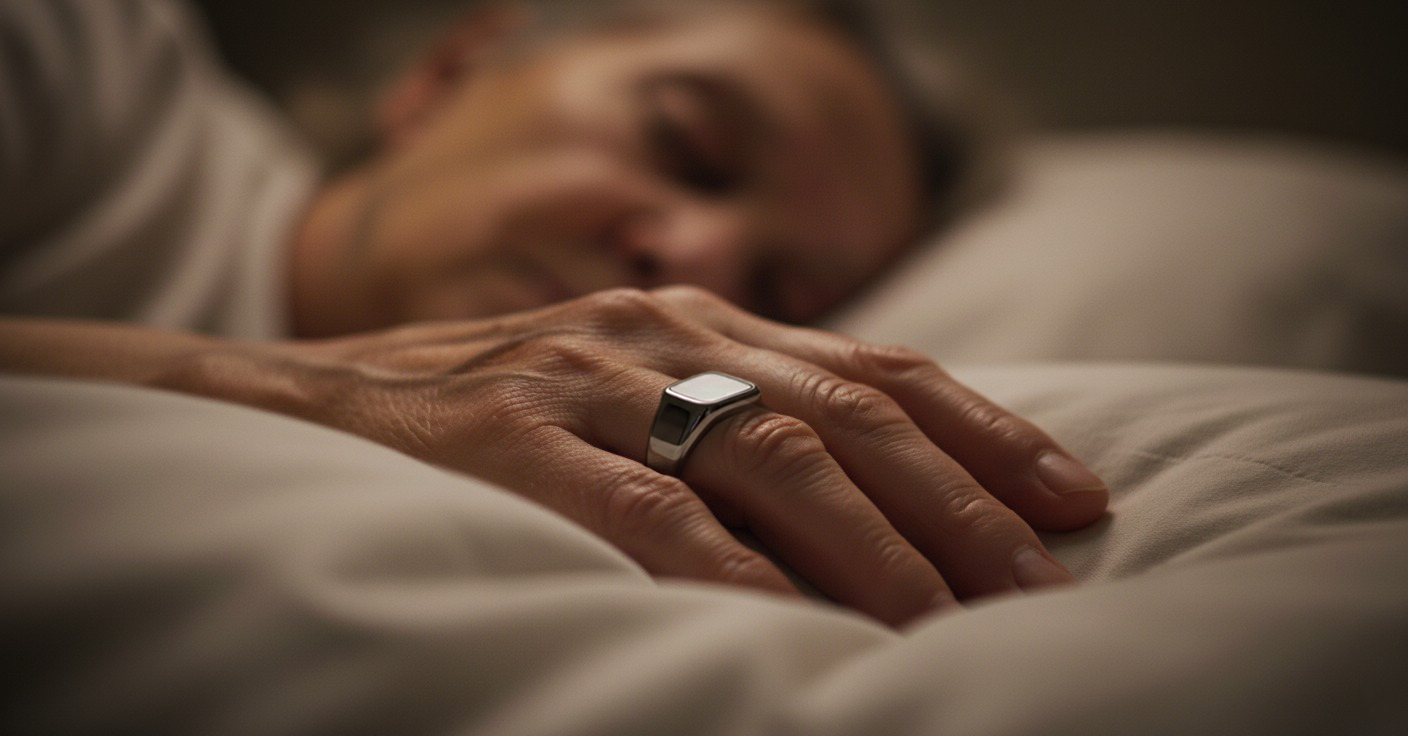
A finger is not necessarily a better place for a sensor than a wrist, but a ring can be small, discreet, and comfortable enough to stay on through ordinary life, including sleep.
There is no screen to manage, no menu to learn, and no watch-style stream of notifications. It does not look like a medical alert pendant. For someone who removes watches, dislikes visible safety devices, or prefers their own watch to a bulky smartwatch, that can be the difference between protection in theory and protection in real life.
A smart ring may be a better fit when the person:
wants to avoid gaps in protection
dislikes smartwatches, or already wears a normal watch
removes watches at night
wants something discreet and passive, with no screens or menus
is more likely to tolerate a ring than a pendant
This is where Haelo is different from wellness rings.
Most smart rings, like Oura, the Samsung Galaxy Ring and RingConn, are built for sleep, recovery and fitness. They can be genuinely useful, but they are not fall detection products.
Haelo is being built for a different job: protection.
What Haelo is designed to do
Haelo is designed as a smart ring for emergency detection, including fall detection, caregiver alerts, and passive protection. The ring uses motion and physiological sensors such as an accelerometer, gyroscope, and optical heart-rate sensor, then sends data through Haelo's connected infrastructure for classification and alerting.
Haelo also handles alerts differently. Rather than acting as a phone on the finger, it is designed to reach the people who already know the wearer, quickly and clearly.
That means Haelo is a better fit for families asking:
"If Dad falls when he's home alone, how long before anyone knows?"
"What if she falls and can't press a button or reach her phone?"
"Mom won't keep a pendant on because it looks medical, so is there something more discreet?"
"Can it alert me and the family directly, rather than a call centre?"
Those are different questions from "Can the wearer make a phone call from the device?" or "Can the device show messages on a screen?" For some families, that difference is exactly the point.
The honest limitations of a smart ring
A smart ring is not the right answer for everyone.
A ring uses a different response model from a smartwatch. Haelo is not designed to be a tiny phone. It does not have a screen, speaker, microphone, or built-in two-way calling. It should not be treated as a direct replacement for a cellular smartwatch if the wearer needs to speak to emergency services from the device itself.
Location also works differently. Watches are stronger for GPS, especially outside the home. A ring-based system depends on a connected phone, hub, or local network.
And, as with every fall detection system, soft falls are harder than hard falls. A fall detection ring still needs validation, good algorithms, and sensible expectations.
Haelo is also in pre-order, with manufacturing to follow. So if a fall detection device is needed urgently, Haelo is not the right choice today, and an available-now smartwatch is the safer option.
A smart ring may not be the best option if the person:
needs to call emergency services or a monitoring centre from the device itself
needs full standalone GPS
wants a screen for messages or calls
wants a product available to buy right now
For those users, a smartwatch or monitored medical alert system may still be the safer practical choice today.
For more detail on Haelo's hardware, validation work, privacy standards, and limitations, see Haelo's technology and validation page.
What about other fall detection solutions?
Rings and watches are not the only options. Medical alert pendants, home sensors, camera or radar monitoring, and phone-based apps each suit different situations. We compare them in our guide to senior monitoring systems.
How to choose the safest option
Don't start with the device. Start with the person, then run through the questions below.
1. Will they actually wear it?
This is the most important question. A smartwatch with excellent fall detection is not useful if it is on the bedside table. A pendant with professional monitoring is not useful if it is left in a drawer. A ring is not useful if it feels uncomfortable and gets removed.
Ask honestly: do they already wear a watch? Do they already wear rings? Would they feel embarrassed wearing a pendant? Do they remove jewellery at night? Are they likely to tolerate a visible safety device?
The best device is often the least resisted one.
2. Will it be worn overnight?
Night-time protection matters. Falls often happen during bathroom and bedroom trips, when someone is tired, disoriented, or moving in low light. This is also when people are least likely to have a phone nearby or another person watching.
If a device needs charging every night, that may create a gap in protection. This is one of the strongest arguments for a smart ring or a longer-battery wearable - not because battery life is impressive on a spec sheet, but because it reduces the number of moments when the person is unprotected.
3. Can it act automatically?
Manual buttons are useful. They are not enough for every situation. After a fall, someone may be unconscious, confused, injured, in pain, or unable to reach the device. They may also minimise the situation and choose not to press the button.
Automatic detection matters because the person may not be able to ask for help. But automatic detection should never be treated as perfect. The best approach is to understand what kind of falls the device is designed to detect, what happens after an alert, and who receives it.
4. Who receives the alert?
Different devices send alerts to different places. Some call emergency services. Some notify family. Some connect to a monitoring centre. Some simply create an app notification. These are very different outcomes.
Before choosing, ask: does the device call emergency services directly? Does it notify named family members? Is there professional monitoring? Can multiple caregivers be connected? Does the alert include location? What happens if the first contact misses the alert? A fall detection device is only as strong as the response pathway behind it.
5. Does it work outside the home?
Some risks happen at home. Others happen outside. A home sensor system may help indoors but do nothing in the garden, street, supermarket, or park. A smartwatch with cellular and GPS may offer stronger outdoor protection. A ring may be strongest for continuous wear but more dependent on its connected infrastructure.
Someone who rarely leaves home may need a different system from someone who walks independently every day.
6. What is the real cost?
Compare the full cost, not just the device price. Look at upfront device cost, monthly subscription, cellular plan, monitoring fee, activation fee, replacement cost, contract length, and whether fall detection costs extra.
A cheap device with an expensive monthly plan may cost more over three years than a higher-priced device with a lower subscription.
Frequently asked questions
Does the Apple Watch detect falls?
Yes. Current Apple Watch models such as Apple Watch Series 11 and Apple Watch SE 3 include Fall Detection, along with Emergency SOS and other safety features.
Apple Watch's strength is its on-device emergency workflow. Depending on the model, setup, connectivity, and location, it can support emergency calling, location features, screen prompts, and two-way communication. The main limitation is battery: it needs charging often, and whenever it is off the wrist to charge, including overnight, it cannot help.
Do any smart rings detect falls yet?
No. No smart ring on the market today offers fall detection. The popular ones, Oura, the Samsung Galaxy Ring, RingConn and Ultrahuman, are built for sleep, recovery and general wellness, not safety.
Haelo is the exception: it is being built specifically for protection, including fall detection and caregiver alerts, which makes it the first smart ring designed for the job. It is currently in pre-order, with manufacturing to follow, so unlike an Apple Watch or Samsung Galaxy Watch it is not yet available to buy today.
Do Samsung Galaxy Watches detect falls?
Yes. Samsung says Galaxy Watch Active2, Galaxy Watch3, and its Wear OS models include hard fall detection, with SOS options for emergency contacts when the feature is enabled.
Can a smart ring call emergency services?
No. A smart ring does not have a speaker, microphone, screen, or cellular calling system in the way a smartwatch can. Haelo is designed around caregiver alerts rather than two-way calling from the ring itself.
The alert pathway is different. A smartwatch is better if the wearer needs to speak directly to emergency services from the device. A smart ring may be better if the goal is passive, discreet, continuous detection and family notification.
Is a smart ring better than a medical alert pendant?
It depends on the person. A smart ring may be better if the wearer refuses pendants, feels embarrassed by them, or is more likely to keep a ring on. A pendant may be better if professional monitoring and a simple emergency button are the priority.
The key question is not which device is theoretically safer. It is which device creates the more reliable safety net for that person.
Which option is best for someone with dementia?
For someone with dementia, simplicity and compliance matter more than features. A touchscreen smartwatch may be too complex for some people. A pendant may work if the person tolerates it, but it may also be removed or forgotten. A smart ring can be attractive because it is passive and discreet, but families still need to understand the alert pathway and limitations.
In many dementia cases, the best setup may combine more than one layer: a wearable for personal alerts, home sensors for routine changes, and caregiver check-ins. Always discuss significant safety decisions with a clinician, occupational therapist, or care professional who understands the person's needs.
What is the best fall detection device for someone who lives alone?
For someone living alone, prioritise three things: automatic detection, reliable alert escalation, and high wear compliance.
A smartwatch may be best if the gaps in protection while it charges are acceptable. A monitored pendant may be best if they want professional emergency response. A smart ring may be best if they need something discreet enough to keep on all day and night. For someone living alone, the wrong device is one they stop using.
Are fall detection devices always accurate?
No. No fall detection device detects every fall. Hard, sudden falls are easier to detect. Soft falls, slides, collapses, and unusual movements are harder. False alarms can also happen.
The goal is not perfection. The goal is to reduce the chance that someone falls, cannot get help, and remains unnoticed.
Transparency
Haelo makes a smart ring designed for fall detection, caregiver alerts, and passive protection for vulnerable people. This article compares Haelo with other categories of fall detection technology, including smartwatches, pendants, home sensors, camera-based systems, and phone apps.
We aim to describe those options fairly. A smartwatch, pendant, or monitored system may be the better choice for some users, especially where direct emergency calling, professional monitoring, immediate availability, or standalone GPS is the priority.
Medical and safety disclaimer
Fall detection devices can reduce risk, but no device can detect every fall or guarantee emergency response. Haelo is not designed to diagnose, treat, cure, or prevent medical conditions, and should not replace professional medical advice, emergency services, or a personalised care plan.
If you are choosing a device for someone at high risk of falling, speak with a qualified healthcare professional, occupational therapist, or care provider.
Methodology
This article was last checked in September 2026. We reviewed manufacturer materials and current product information for major smartwatch and smart ring examples, including Apple Watch, Samsung Galaxy Watch, Google Pixel Watch, Oura, Samsung Galaxy Ring, RingConn, and Haelo.
Features, pricing, battery life, country availability, emergency calling, cellular support, subscriptions, and fall detection settings can change. Always check the current product page and support documentation before buying.
First published